Infantry Attack: War 3D FPS
- 4.6
- Rating
- 10.00M
- Installs
- Free
- Price

 Analysis by App-foxy
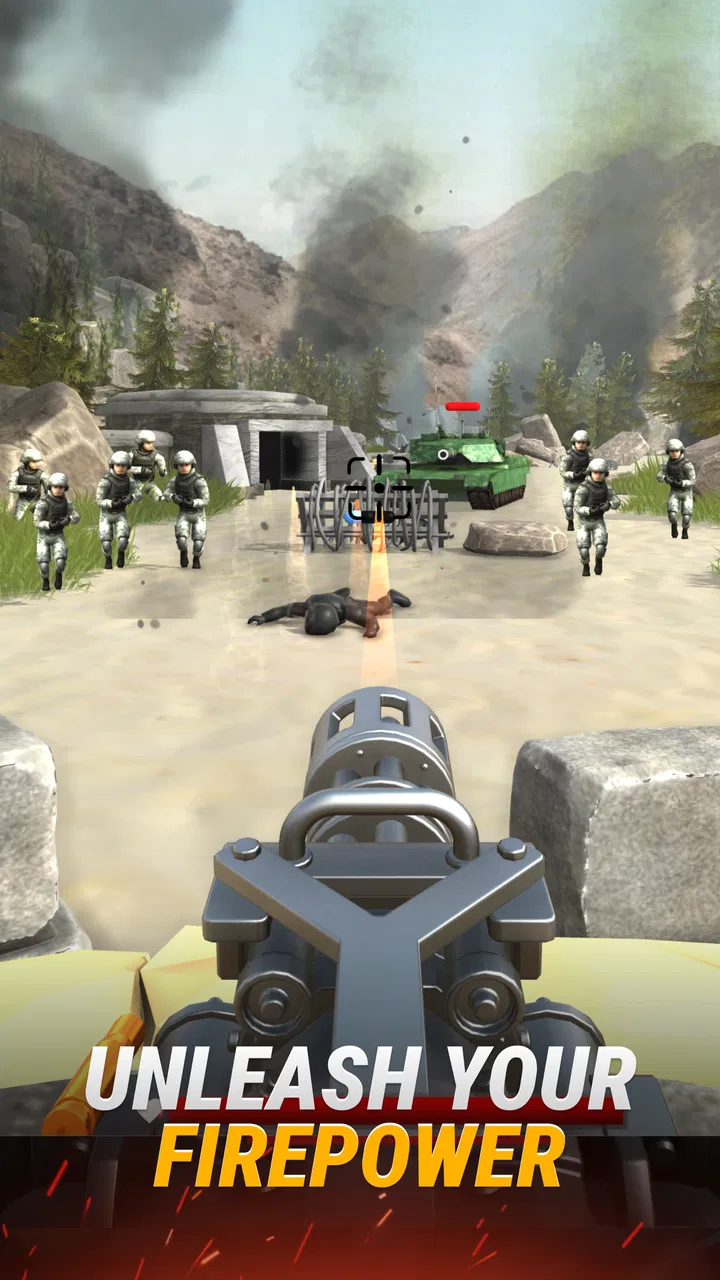
I spent time with Infantry Attack: War 3D FPS to understand what kind of action game it really is beyond its brief battlefield premise. It is a free Android game from VOODOO, built around short, direct encounters where the goal is to survive a machine-gun fight and push through enemy soldiers. The idea is easy to understand within seconds, which is a big part of its appeal: you can pick it up when you have a small break without first learning a complicated control system or a long story.
My overall impression is that this is best approached as a quick-action shooter rather than a deep military simulation. It aims for immediate movement, immediate targets, and immediate feedback. That makes it suitable for players who want uncomplicated combat, but less suitable for anyone looking for a large campaign, careful tactical planning, or the detailed weapon handling found in more serious first-person shooters.
How the battlefield feels during a normal session
The first thing I noticed is the pace. The game does not seem interested in slowly building atmosphere before asking me to act. Its central loop gets to the battlefield quickly, and the pressure comes from managing enemy soldiers while keeping my attention on the direction of the fight. That quick start is useful when I want a game that fills a few minutes rather than demands a long uninterrupted session.
You May Also Like

 Blood Strike: 2.5 Anniversary
Blood Strike’s Loadouts Turn Every Drop Into a Tactical Gamble
A close look at Blood Strike’s custom loadouts: how fast access to signature weapons reshapes its battle royale rhythm, rewards preparation, and narrows the gap between fights.

 Pandora - Music & Podcasts
Pandora’s Music Is Easy to Start, but Harder to Recover
Pandora’s strength is its low-effort path from a seed to a station. Its weak spot is how much confidence it asks you to place in connection, setup, and quiet recovery.

 8 Ball Pool
 Is Built on Rivalries, Rematches, and Routine
A close look at the rivalries, rematches, shared routines, and unanswered safety questions that turn a quick pool match into a persistent mobile community.

 Samsung Music
’s Quiet Strength Is Playing What You Already Own
Its reach comes less from spectacle than from dependable access to a personal library. That simplicity is both the app’s strongest retention engine and its ceiling.

 AccuWeather: Weather Radar
AccuWeather Review: A Quick, Clear Forecast for Everyday Decisions
For everyday plans, the best forecast is the one you can understand quickly. AccuWeather makes rain timing, radar, and local conditions easy to act on, with a few trade-offs.

 Hill Climb Racing
Why Hill Climb Racing Still Turns Crashes Into One More Run
A tiny car, a bumpy hill and one more upgrade: Hill Climb Racing keeps resurfacing because its simple chaos makes every near-miss feel personal.
More From Our News Desk



That speed also changes how I judge mistakes. In a slower shooter, I might have time to study a map, prepare a route, or wait for the right shot. Here, the enjoyable part is reacting promptly and keeping the action moving. I found it more satisfying when I treated each encounter as a compact test of awareness instead of trying to play it like a full-scale tactical operation.
The controls and presentation are aimed at accessibility. I did not need to spend much time interpreting the premise: this is an infantry battle with shooting at its center. That clarity helps younger or less experienced players understand what to do, although the Teen content rating is worth keeping in mind before installing it for someone else.
One practical tip is to play with a clear view of the screen and avoid tapping in a rushed, careless way. Fast action games often punish attention that is divided between the game and another task. A short session can feel smooth when I focus on the encounter, but the same session becomes frustrating if I am constantly interrupted and return to the screen without remembering what was happening.
The game’s free entry point is another reason it is easy to try. I can install it without committing to an upfront purchase, then decide whether the loop suits me. In-app purchases range from $0.99 to $47.99 per item, so I would personally avoid treating optional spending as part of the basic test. The sensible approach is to play first, learn whether the pace works for you, and only then consider whether any purchase is worth making.
What makes the short-form action work
Its strongest quality is immediacy. The battlefield theme is recognizable, the objective is straightforward, and the action does not require a large amount of preparation. That combination makes it a reasonable choice for a quick commute break, a waiting room, or a few minutes at home when I want something more active than a puzzle but less demanding than a long console-style campaign.
A realistic everyday scenario would be a player opening it after finishing a short task, completing a compact run, and closing the game before returning to work or study. I would not choose it for a session where I wanted a rich narrative arc, but I would consider it when I wanted a simple way to reset my attention. The game’s structure is more compatible with repeated brief visits than with a single extended evening of serious play.
There is also a useful distinction between perceived speed and actual device performance. The action may feel fast because enemies and decisions arrive without much downtime, but that does not automatically mean the application is demanding on every phone. A responsive experience depends on the device, the operating system, available resources, and whatever else is running in the background. I would judge those separately rather than assuming that a visually active shooter must be heavy.
When the action becomes demanding
The busiest moments are the ones in which several enemies compete for my attention and I have to decide where to aim or move without hesitation. Those moments reveal whether I am actually paying attention or simply reacting to the nearest target. They are also where the game can feel repetitive if I am expecting a wide range of combat situations instead of variations on its central firefight.
My advice is to avoid playing on autopilot. Even in a simple action game, a deliberate rhythm helps: scan the visible battlefield, identify the most immediate threat, act, and then reassess rather than holding one response for too long. This is not a complex tactical system, but it is a small habit that makes the encounters feel more controlled.
Heavy-use moments can also expose the difference between a good short session and an uncomfortable one. If the phone is already busy with other applications, or if the player is using the game while the device is under strain, the experience may feel less consistent. I would close unnecessary background activity before a longer session, not because the game is confirmed to be unusually resource-intensive, but because it is a sensible way to give any action title the best chance of responding well.
Another trade-off is visual focus. A battlefield shooter needs enough contrast and clarity for targets to stand out, but a player who expects highly detailed environments may find the direct presentation less rewarding. The game’s value is in the encounter rather than in exploring a large world. That is a strength for speed and a weakness for variety.
Reliability, restarts, and day-to-day use
For me, reliability in a mobile game is not only about whether it opens. It is also about whether I can return to it easily, understand the current objective, and get into another action sequence without unnecessary friction. Infantry Attack: War 3D FPS benefits from its simple premise here. I do not need to remember a complicated plot or a large collection of systems before playing again.
The Android release has a minimum requirement of version 8.0, which gives the game a reasonably broad starting point among compatible devices. Still, compatibility is not the same as identical performance. Two phones that meet the same operating-system requirement can differ considerably in available memory, processor capability, display response, and how aggressively they manage background applications.
If the game ever feels less responsive after extended use, my first recovery step would be uncomplicated: close it fully, clear competing background activity, and reopen it. I would also make sure the device is not already struggling with heat or low free space. Those steps are general mobile maintenance rather than claims about a specific fault in this title, but they are practical when an action game stops feeling as immediate as it did at the beginning of a session.
I would not rely on the game as my only source of entertainment during a situation where a lost session would matter. Mobile games can be interrupted by calls, notifications, battery limits, or operating-system behavior. The short-session design makes recovery easier than it would be in a long narrative game, but I still prefer to assume that an interruption may happen and avoid starting a run when I cannot spare the attention.
The game’s popularity suggests that the basic concept has reached a substantial audience: it has more than 10 million installs, with an average rating of 4.6 from roughly 112 thousand ratings. Those figures make it easier to understand why the title attracts attention, but they do not replace personal testing. A player who enjoys quick battlefield action may rate it highly, while someone seeking depth may feel differently even if both use the same phone.
Device limits and sensible expectations
I would describe its resource demands cautiously. It is a mobile action game with a battlefield presentation, so the screen may become busy during combat, but I would not promise identical smoothness across the entire Android range. The safest expectation is that newer or better-maintained devices should offer a more comfortable experience, while older compatible phones may require more patience if the game competes with other demanding applications.
Players with limited storage or an older handset should think about the type of experience they want. Meeting the minimum operating-system requirement only answers whether installation is supported at that level; it does not guarantee the same visual stability or loading behavior as a newer device. If your phone already struggles with other 3D games, I would be cautious about choosing this as your main action title.
Battery behavior is another practical consideration. I would not describe a specific drain rate without a controlled comparison, but active 3D combat generally makes more demands than reading or listening to music. For that reason, I prefer short sessions away from a charger unless I know my phone handles games comfortably. Lowering expectations about marathon play also fits the game’s quick, repeatable design.
Screen size can affect comfort as well. On a smaller display, targets and movement may feel more crowded, while a larger phone can make the battlefield easier to read. This is not a reason to reject the game, but it is a reason to test the controls before spending money inside the app. If aiming feels imprecise on your handset, purchases will not solve the underlying comfort problem.
I also recommend checking the age rating before handing the device to a child. The listed rating is Teen, so this is not a title I would automatically place in a younger player’s hands simply because it is free and easy to start. The military combat focus is central to the experience, and parents should make that choice based on the player’s age and sensitivity to action violence.
Where it stands beside other mobile shooters
Compared with large competitive shooters, this game is easier to approach and less intimidating. I do not need to learn a broad multiplayer meta, memorize extensive equipment options, or commit to a long match before I understand whether I am enjoying myself. That makes it a better fit for casual action players who want a self-contained burst of shooting.
The trade-off is depth. Bigger shooter alternatives usually offer more room for teamwork, map knowledge, weapon specialization, or long-term improvement. If your favorite part of the genre is coordinating with friends or refining a competitive strategy, Infantry Attack: War 3D FPS may feel too narrow. Its advantage is not that it replaces those games; it is that it asks for less time and preparation.
It also differs from slower tactical games. Those titles reward patience, positioning, and careful planning over immediate reactions. Here, the appeal is the direct confrontation. I would choose this game when I want action now, and a tactical alternative when I want to think through every movement. Neither approach is automatically better; they serve different moods.
Arcade-style alternatives may provide an even lighter experience, especially if their rounds are built around abstract targets or simpler visuals. This title’s battlefield framing gives the action a stronger military identity, but that identity may not be enough for players who need a story or a wide variety of environments. Knowing that distinction before installing it prevents disappointment.
Who should try it, and who should skip it
I would recommend giving it a chance if you like straightforward action games, prefer short sessions, and enjoy the feeling of handling a crowded firefight without learning a complicated ruleset. It is also a useful option for someone who wants a free trial before deciding whether this particular style of mobile shooter belongs on their phone.
I would be more hesitant to recommend it to players who need deep progression, a detailed campaign, carefully balanced competition, or a strong narrative reason to keep returning. The direct design that makes it accessible can also make it feel limited. If repetition quickly bothers you, the central loop may not hold your interest for long.
I would also skip it if you are specifically searching for a calm game. Even though individual sessions can be brief, the battlefield premise and constant combat are not relaxing in the same way as a word game, simulation, or quiet puzzle. The Teen rating reinforces that this is intended for an older audience than a family-friendly casual title.
Before considering an in-app purchase, I would ask myself three questions: Do I enjoy the basic combat without spending? Does the game remain comfortable on my phone after several sessions? And am I paying to improve a genuine habit of play rather than trying to force myself to like it? Since individual items can cost from $0.99 up to $47.99, that pause is especially important.
My performance verdict after regular use
Infantry Attack: War 3D FPS succeeds when I judge it by its intended role: a free, quick-entry battlefield shooter for Android players who want immediate action. VOODOO keeps the concept easy to grasp, and the game’s strong average rating of 4.6 shows that its straightforward approach has broad appeal. The current version is 1.36.6, so anyone installing it should use the latest available release for the most current experience offered on their device.
My performance verdict is positive but measured. I like the fast access to combat, the low learning barrier, and the fact that a short break can be enough time to enjoy it. I would not describe it as a replacement for a full competitive shooter or a tactical campaign. Its perceived speed comes from compact, active encounters, while its practical smoothness will still depend on the Android phone running it and what else that device is doing.
The most useful way to approach it is to test the free version without rushing into purchases, play in focused sessions, and pay attention to how your own handset handles the busiest moments. If the controls feel responsive and the repeated infantry battles keep you engaged, it can be a convenient action game to keep around. If you want extensive variety, deeper strategy, or a long-form story, I would spend your time elsewhere.
In the end, I see it as a focused pick rather than an all-purpose shooter. Its real strength is delivering a quick battlefield fix without demanding a large time commitment. That makes it easy to recommend to casual action fans, while its limited scope and purchase range are good reasons for more demanding players to remain cautious.
FAQs for Infantry Attack: War 3D FPS
01What is Infantry Attack: War 3D FPS?
Infantry Attack: War 3D FPS is a mobile first-person shooter centered on fast-paced infantry combat. Players move through battlefield-style missions, use different firearms, and fight enemy forces in 3D environments. The game is designed for short action sessions, with straightforward controls and objective-based levels that make it accessible even if you are new to mobile shooting games.
02How does the gameplay work, and is it easy to control?
The game uses familiar touchscreen controls for aiming, moving, shooting, and interacting with weapons or mission elements. In our experience, the basic mechanics are easy to understand, although aiming accurately can take some practice on smaller screens. Missions generally focus on advancing through an area and eliminating opponents, so the gameplay is more immediate and arcade-like than a complex military simulator.
03Can Infantry Attack: War 3D FPS be played offline?
Some parts of Infantry Attack: War 3D FPS may be available without a continuous internet connection, particularly if the required game files have already been downloaded. However, connection requirements can vary between versions and may apply to advertisements, updates, cloud features, or other online services. It is best to launch the game once while connected before traveling or playing in an area with limited internet access.
04Does the game contain ads or in-app purchases?
As with many free-to-download mobile shooters, Infantry Attack: War 3D FPS may include advertising and optional purchases. Ads can appear between missions or when claiming certain rewards, while purchases may provide extra resources, weapons, or other progression benefits, depending on the version available in your region. Review the store listing and payment settings before downloading, especially if children use the device.
05What devices are compatible with Infantry Attack: War 3D FPS?
Compatibility depends on the Android or iOS version, available storage, and the hardware capabilities of your phone or tablet. Because the game uses 3D graphics, newer devices with sufficient memory generally provide smoother performance and faster loading. Before installing, check the official store page for the current operating-system requirements, download size, and any device-specific limitations listed by the developer.
Pros
- Fast-paced FPS missions with straightforward controls.
- 3D battlefields create a more immersive combat atmosphere.
- Short missions are convenient for quick gaming sessions.
- Multiple weapons add variety to the shooting gameplay.
- Offline play may be useful when you have no internet access.
Cons
- Enemy behavior can feel predictable after extended play.
- Repetitive objectives may reduce long-term variety.
- Graphics may look basic on some newer devices.
- Frequent combat can become intense for younger players.
- Progression may feel slower without optional in-app purchases.

Infantry Attack: War 3D FPS
Gallery